Follow the Digital Edge on Google
Table of content
Interesting topics
If your business only exists on Facebook, you’re building your empire on rented land.
It’s a harsh truth — but an important one. Every day, thousands of South African business owners pour time, energy, and money into their Facebook pages, believing that’s enough of an online presence to compete and grow in today’s digital market.
It isn’t.
In 2026, a Facebook page is a supplement to your online presence — not a substitute for it. And if you’re still on the fence about investing in a proper business website, this guide is going to show you exactly what you’re leaving on the table.
The South African digital landscape in 2026
South Africa’s internet penetration has grown significantly over the past few years. With more than 45 million South Africans now online and mobile data becoming increasingly affordable, your customers are spending more time than ever searching for products and services on the internet.
Here’s the reality of how they’re searching:
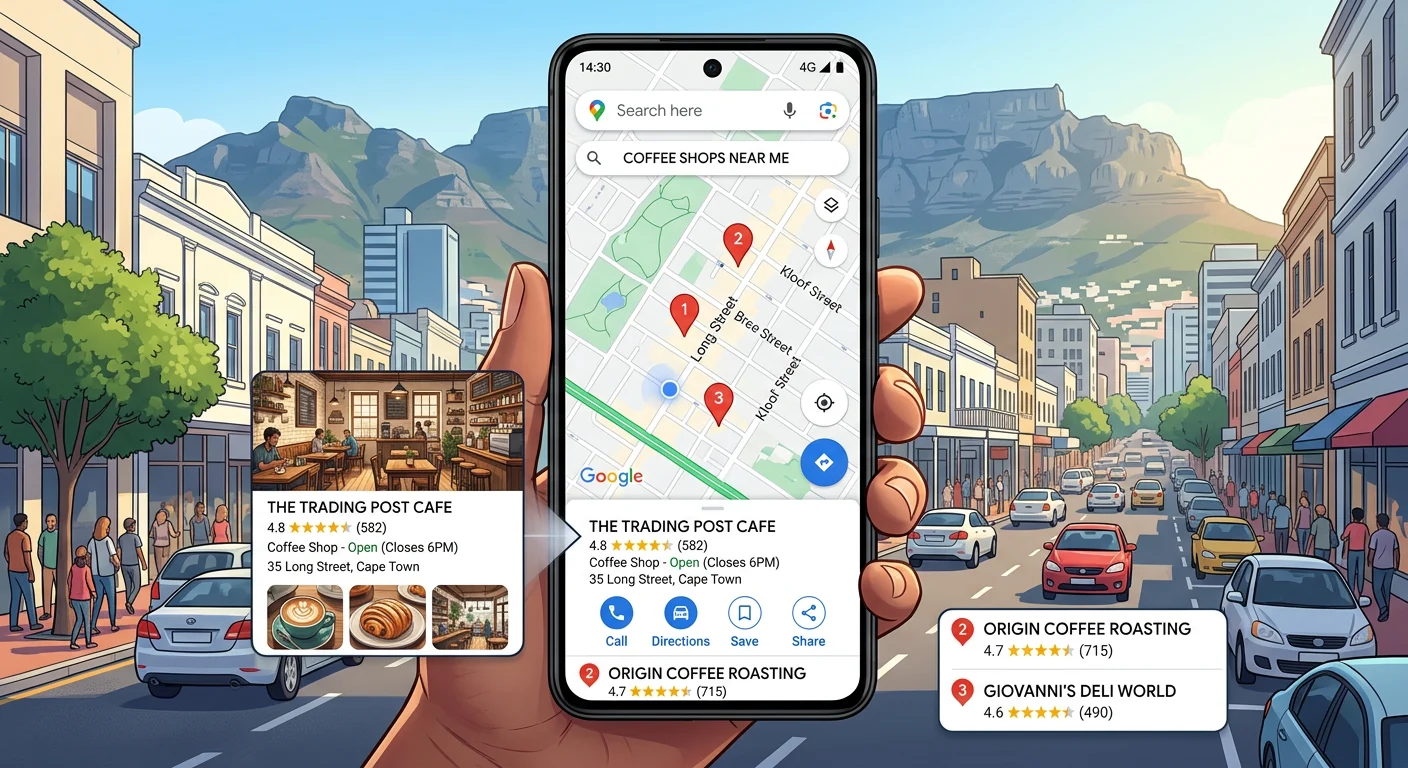
When a potential customer needs a plumber, an accountant, a caterer, or a web designer — they don’t scroll through Facebook looking for a business page. They open Google and type in what they need.
If your business doesn’t have a website, Google can’t show it to them. And if Google can’t show it to them, that customer goes straight to your competitor who does have a website.
It really is that simple.
7 reasons your business needs a website in 2026
1. Google can’t send customers to a Facebook page
Search engines like Google are the starting point for most purchasing decisions. When someone searches “best accountant in Cape Town” or “web designer near me” — Google shows website results, not Facebook pages.
Without a website your business is completely invisible to this enormous pool of high-intent customers who are actively looking for exactly what you offer and have their wallets ready.
A website with even basic SEO setup can start appearing in local search results within weeks — connecting you with customers who are already looking for you.
2. You don’t own your Facebook page — Meta does
This is the single most important point in this entire article.
Your Facebook page belongs to Meta. They can change the algorithm, restrict your reach, increase advertising costs, suspend your account, or shut the platform down entirely — and there is absolutely nothing you can do about it.
We’ve already seen this play out. Facebook’s organic reach for business pages has dropped dramatically over the past decade. What once reached thousands of followers now barely reaches hundreds — unless you pay to boost posts.
Your website, on the other hand, is yours. You own it completely. No algorithm can take it away from you, restrict your reach, or charge you to be seen by your own customers.
3. A website builds credibility that social media can’t
Think about the last time you considered buying from a business you’d never heard of.
What’s the first thing you did? You Googled them.
If you found a professional, well-designed website — you probably felt reassured. If you found only a Facebook page, or nothing at all — you may have hesitated or looked elsewhere.
Your customers do exactly the same thing. A professional website signals that your business is legitimate, established, and worth trusting. It answers the questions every new customer has before they pick up the phone:
A Facebook page can answer some of these questions — but a well-built website answers all of them, on your terms, with your branding, in a controlled environment designed to convert visitors into customers.
4. Your website works for you 24 hours a day
Your Facebook page relies on you posting regularly to stay active. If you go quiet for a week, your engagement drops and your reach collapses.
Your website never takes a day off. It’s open for business at 2am on a Sunday, on public holidays, and while you’re on leave. Potential customers can find you, learn about your services, read your reviews, and submit an enquiry — all without you lifting a finger.
Add an AI chat assistant to your website and you’ve essentially created a digital team member that greets every visitor, answers common questions, and captures lead details automatically — around the clock.
That’s leverage. And it’s something a Facebook page simply cannot replicate.
5. A website gives you data that actually matters
With Google Analytics connected to your website, you gain access to powerful insights that Facebook simply can’t provide:
This data lets you make informed decisions about your marketing, your services, and your content — helping you attract more of the right customers and convert more of the visitors you’re already getting.
6. A website dramatically improves your local SEO
Local SEO is the practice of making your business show up in Google searches relevant to your area. When someone searches “web designer Cape Town” or “electrician Johannesburg” — local SEO determines who appears at the top of those results.
A properly optimised website is the foundation of local SEO. Without one, you simply cannot compete for these high-value local searches — no matter how active your
Facebook page is.
With a website you can:
The businesses that invest in local SEO today will dominate their local search results for years to come. The businesses that wait will find it increasingly expensive and difficult to catch up.
7. E-commerce opens an entirely new revenue stream
If you sell products — physical or digital — a website with an online store transforms your business model completely.
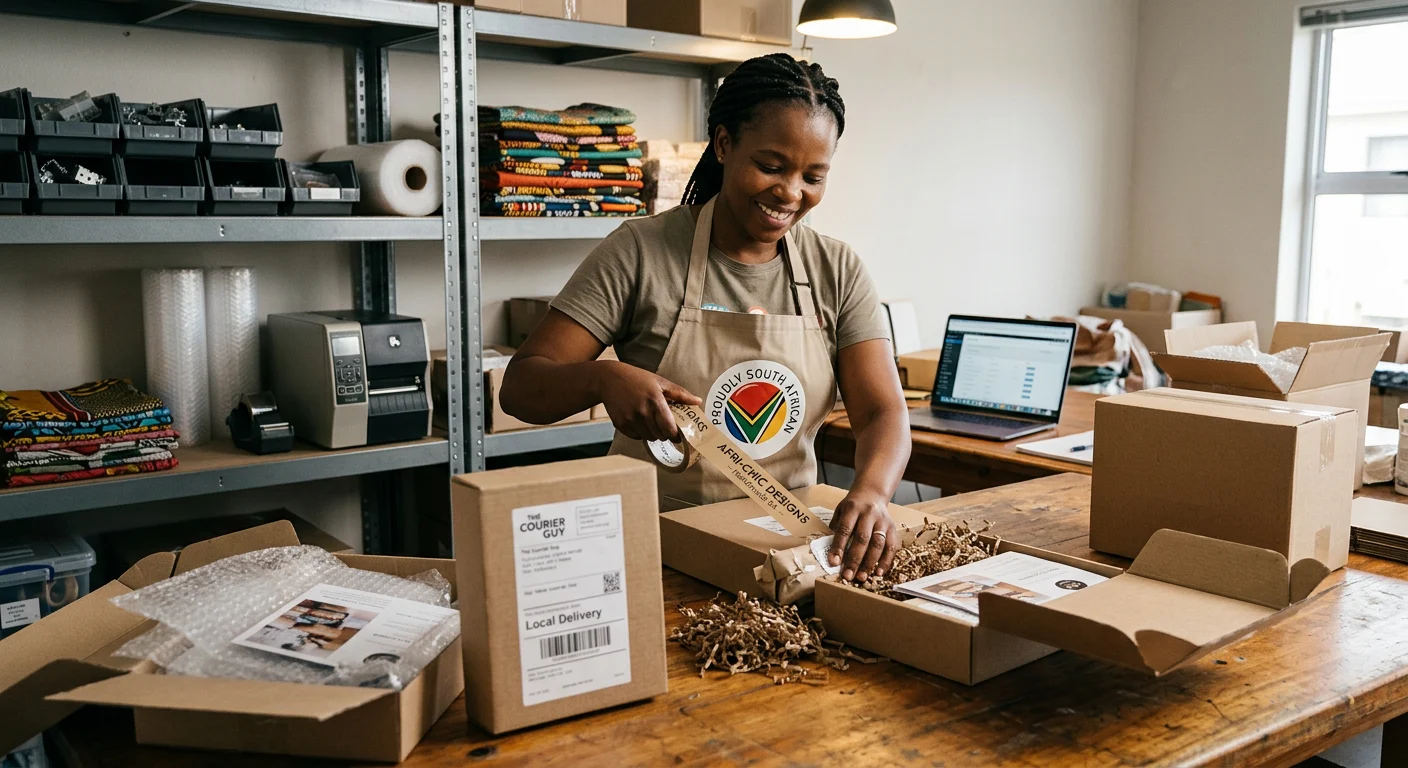
Instead of being limited to local customers who walk through your door, you can sell to anyone in South Africa or beyond. Your products are available to purchase 24 hours a day, 7 days a week, with no staff required to process orders.
WooCommerce — the most popular e-commerce platform in South Africa — integrates seamlessly with PayFast and other local payment gateways, making it easy for your customers to buy with confidence and for you to manage orders, inventory, and fulfillment from one central dashboard.
South African e-commerce continues to grow year on year. The businesses with online stores are capturing that growth. The ones without are watching it pass them by.
“But I already get customers through Facebook — why fix what isn’t broken?”
This is the most common objection we hear — and it’s completely understandable.
If Facebook is working for you today, that’s great. But consider this:
What happens if Meta changes the algorithm next month and your reach drops by 80%? What happens if your account gets hacked or suspended? What happens when your competitors — who do have websites — start outranking you on Google and capturing the customers you never even knew were looking for you?
A Facebook page and a website are not an either/or choice. The smartest businesses use both — Facebook to build community and engage existing customers, and a website to attract new ones, build credibility, and convert visitors into paying clients.
Your Facebook page drives people to your website. Your website converts them into customers.
What does a professional website actually cost in South Africa?
One of the biggest myths about business websites in South Africa is that they’re expensive. They’re not — at least not when you work with the right agency.
At YCIK Digital, our websites start from R3,500 for a professional, mobile-friendly, SEO-ready business site. That’s a once-off investment that starts working for your business immediately and continues delivering value for years to come.
To put that in perspective — R3,500 is less than a single month of Facebook advertising for most businesses. The difference is that your website keeps working for you long after the ads stop.
What should a good business website include?
Not all websites are created equal. Here’s what every South African business website should have as a minimum in 2026:
Mobile-responsive design — over 70% of SA internet users browse on phones. Your site must look and work perfectly on any device.
SSL certificate — the padlock in the browser bar. Without it, Google flags your site as “not secure” and visitors leave immediately.
Clear call to action — every page should tell the visitor exactly what to do next. “Get a free quote”, “WhatsApp us”, “Book a consultation.”
Basic SEO setup — page titles, meta descriptions, fast loading speed, and clean URL structure so Google can find and rank your pages.
Contact details — phone number, email, and WhatsApp link should be visible on every single page.
Google Analytics — so you can track your traffic and understand how visitors are finding and using your site.
If your current website is missing any of these — or if you don’t have a website at all — now is the time to fix that.
Final thoughts
A Facebook page is a great tool. But it’s a tool — not a strategy.
In 2026, a professional website is the foundation of every successful South African business’s digital presence. It’s where you send people from social media. It’s how Google finds you. It’s how new customers decide whether to trust you. And it’s the one digital asset you truly own and control.
If your business doesn’t have a website yet — or if your current one is overdue for an upgrade — YCIK Digital is here to help. We build professional, affordable, SEO-ready websites for South African businesses of every size and industry.